 |
New thinking in Termite Management
Because most termites come from nests outside our buildings, doesn't it make more sense to concentrate on finding and killing those nests instead of totally relying on barriers that eventually deteriorate?
Killing off termite colonies is nowhere near as complicated as you may think!
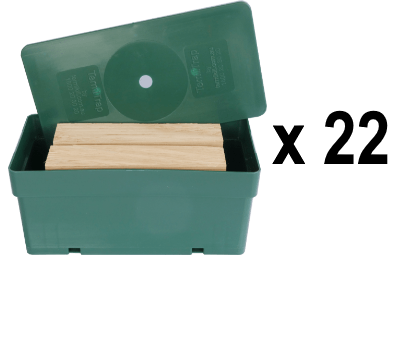
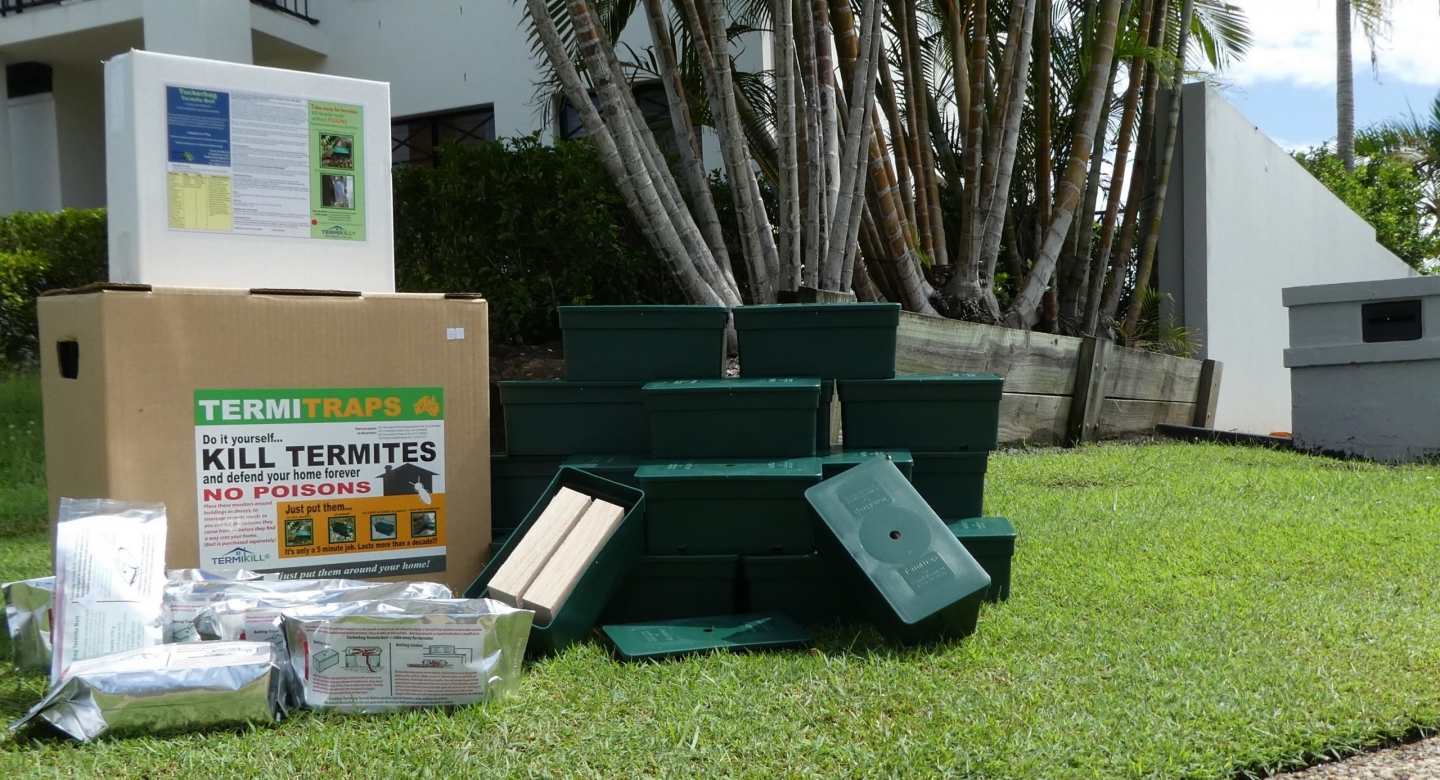
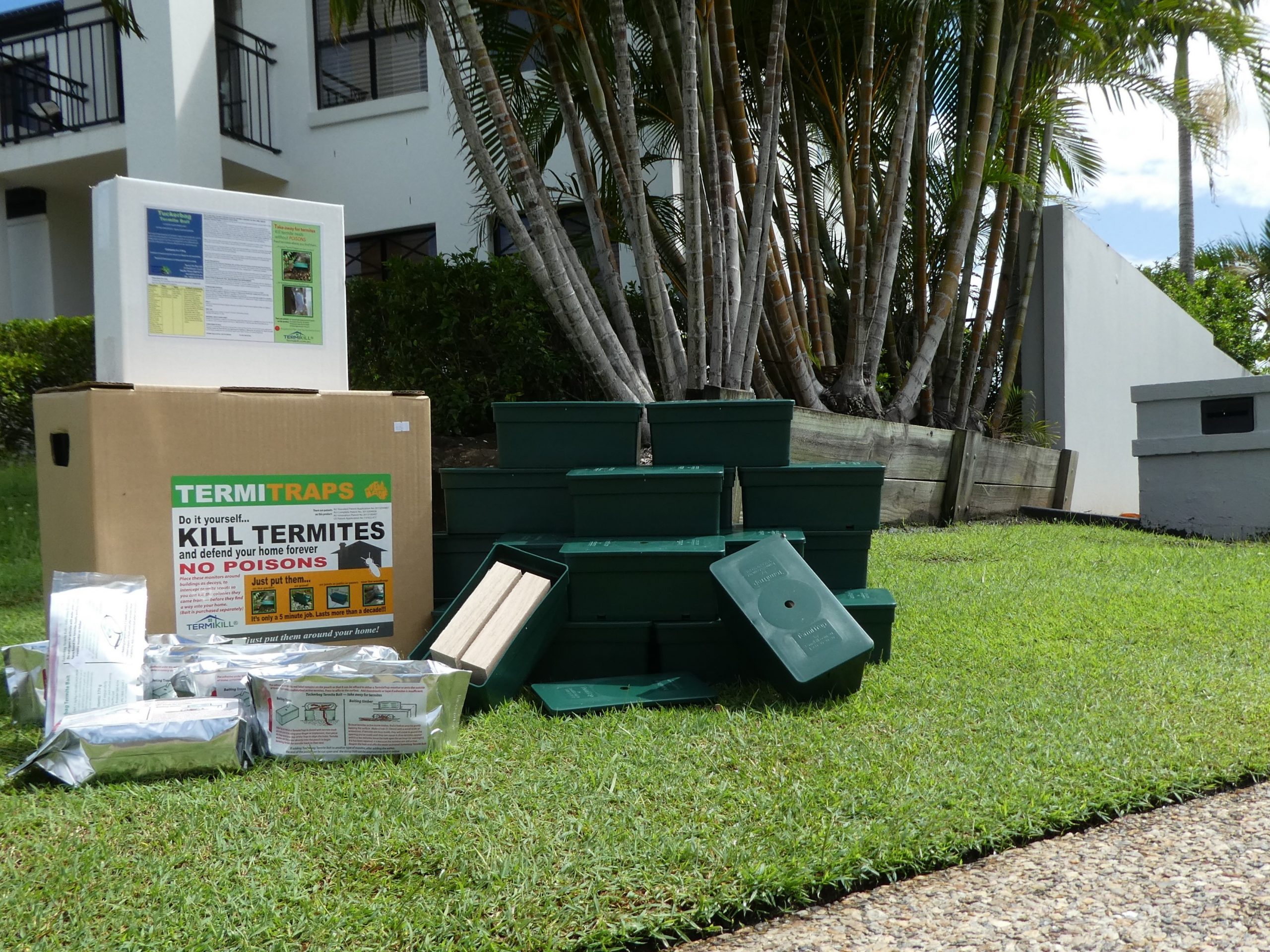
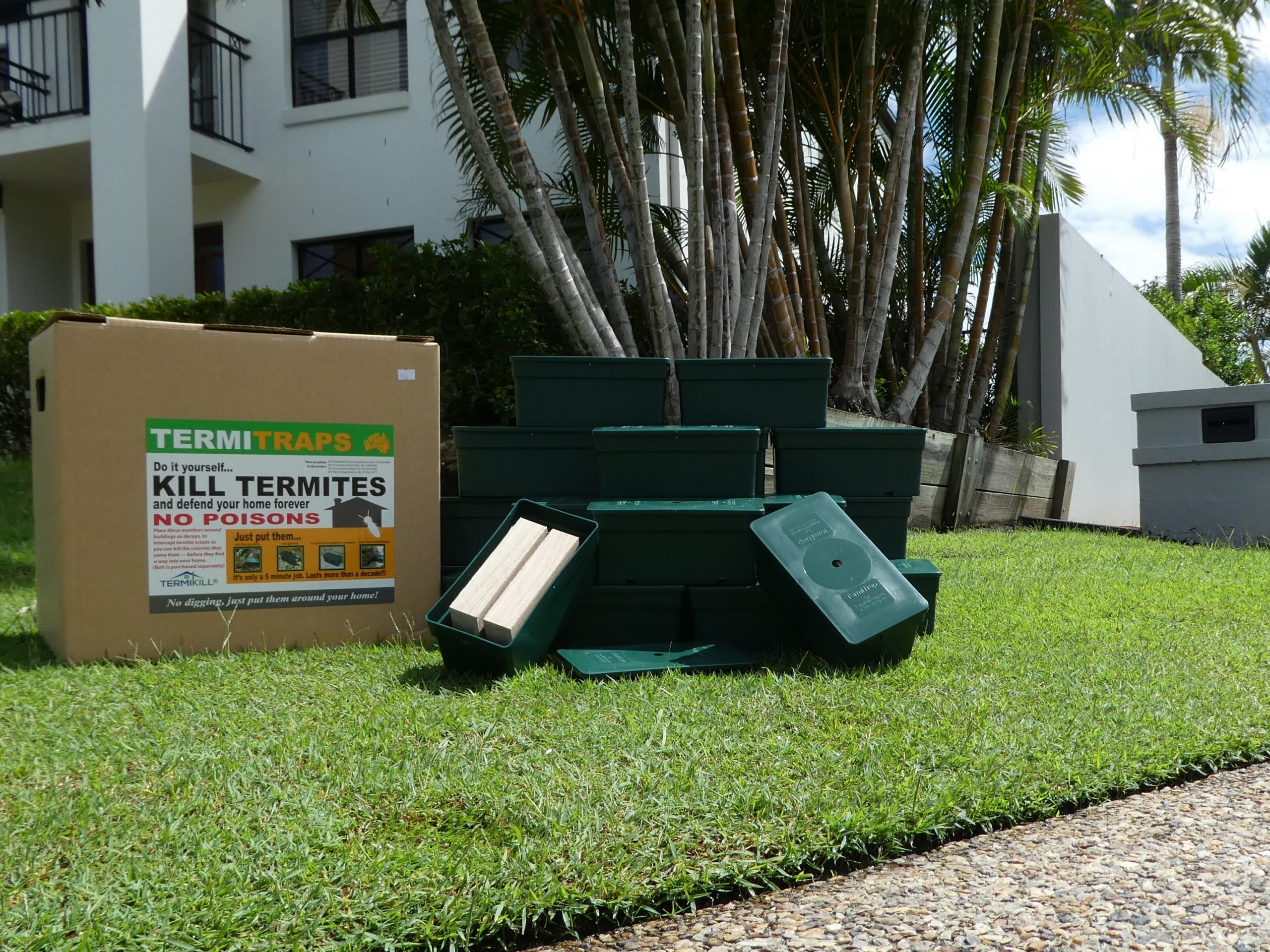
Termites have had the same habits and instincts for umpty million years: they go looking for wood, when they find it they take it back to the main nest and they use a mud mixture to block out any light where they're working. The TermiteTrap uses these instincts against the termites: |
| |
- You put them in the garden where termites can easily find them
- They are full of cardboard which is like TimTams to termites
- There is a window at the top of the trap which lets in light…
|
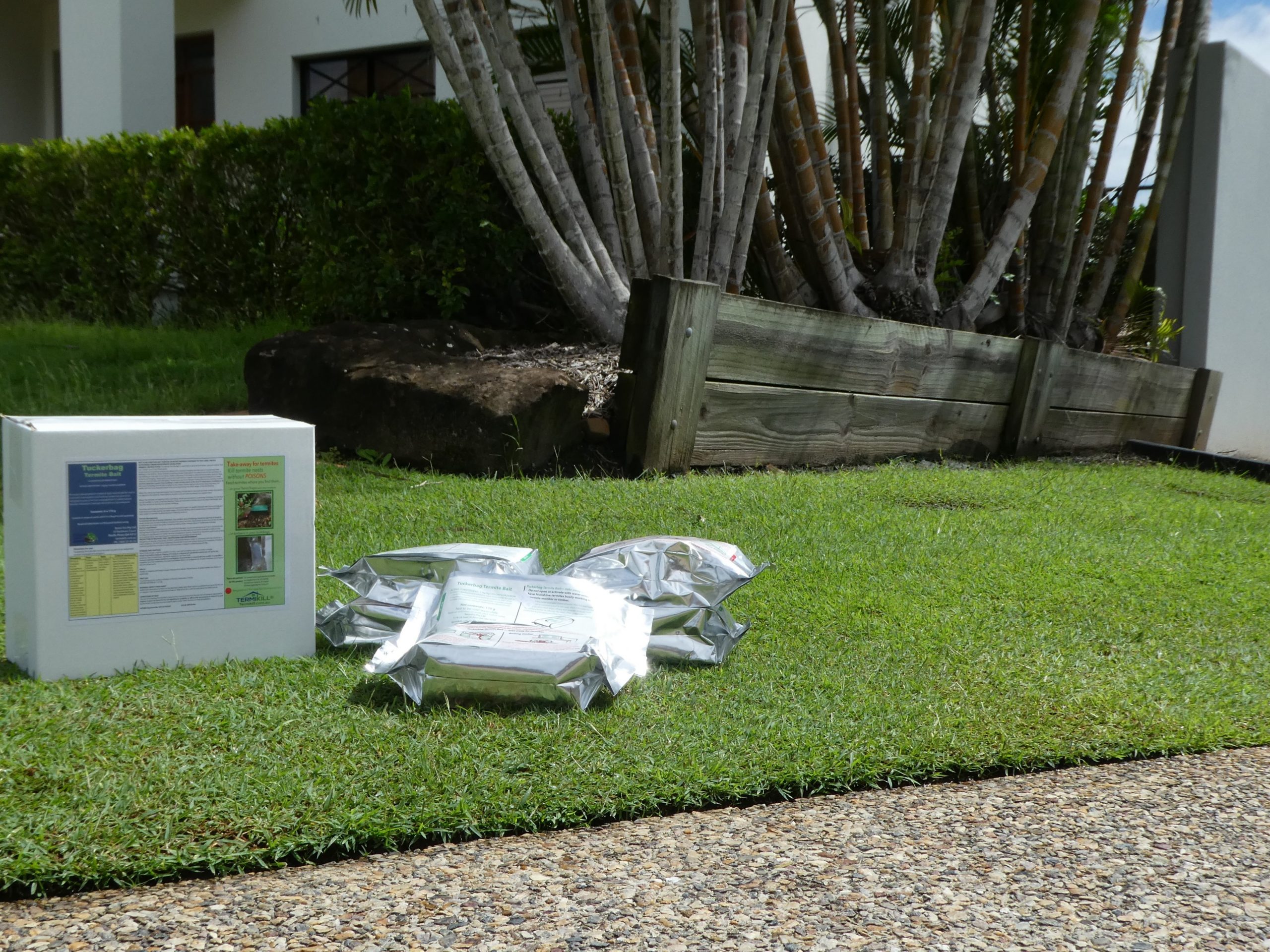
When homeowners see mud on the cardboard, visible through the window, they know that thousands of termites are working away undisturbed. At that time you can dose the Trap with one of the registered, slow action contaminants which is transferred back to the nest killing off the colony.
The professional termite monitoring systems are similar in principle and the result is the same... a dead termite colony. But, there are thousands of dollars still in your pocket. The hardest part is digging a few holes.
It's such a simple concept. And it works!
There is absolutely nothing that you can use against the termite threat that has as big an impact for less money. In other words, they don't cost much, they work and you can take charge of the whole process yourself. You might spend only $373 the first year... after that the system runs on any old cardboard.
Brief explanation:
Within 25 metres of 80% of Australian homes there is a termite colony. The nest may be new and small, up to mature with millions of workers all intent on recycling the timber in the building once they can breach the barriers. Of course, when that happens, all the bits of wood in the framework are joined to each other and the termites are somewhat protected from outside interference and detection by the brick veneer and internal plaster. It's heaven!
| Click on Images below for a larger view |
 |
|
|
|
This photo shows the distribution of termite nests in rural land. Theoretically, this spacing may be superimposed and called ‘normal' after a housing development is completed. Also bear in mind, there will be many young nests developing and not showing as mounds at this time. |
A typical housing development site; all the trees have been bulldozed, the land graded and the lots marked out ready for sale. |
Smashed fragments of trees remain all over (and under) the site. After construction, covered by buildings and turf, they create near-perfect conditions for mating termites looking to begin their colony. |
Since the early days of white settlement in Australia we've been constructing buildings using our fortress mentality by putting metal shields and other physical and chemical barriers between the termite-ridden soil and the timber. But chemicals degrade over 10 years, even less. Barriers can be bent, moved or otherwise breached by home owners, tradesmen and gardening. You only have to watch the media to know that the fortresses we build, fail. A 2004 CSIRO survey reported 1 in 3 homes have a history of termite activity.
The pest management industry are now embracing systems of aggregating termites into monitors set in the soil around buildings and introducing one of the special, slow action contaminants into the monitors so the termite workers can carry it back on their bodies and in the food to be regurgitated for the young, the soldiers and the queen. It is only a matter of weeks and the colony is dead and probably never discovered.
Who's the inventor? What else has he done?

Ion Staunton is an ex Pestie complete with cobwebs and dust in his hair who became an entomologist, co-wrote the first industry text book and correspondence course for TAFE students, was founding secretary of the national pest industry association (after 20+ years they made him a life member) and, when about to retire, he invented and patented the TermiteTrap which could save Australian civilisation as we've come to know it. UNSWPress asked him to revise and bring the main two training text books up to date. He re-wrote
Termites & Borers, A Homeowner's Guide to Detection and Control which is reviewed on this website.